25 Years with the Missouri Department of Transportation
Posted on Wednesday, August 5th, 2026 by Affinis CorpIn Our Clients, tagged in
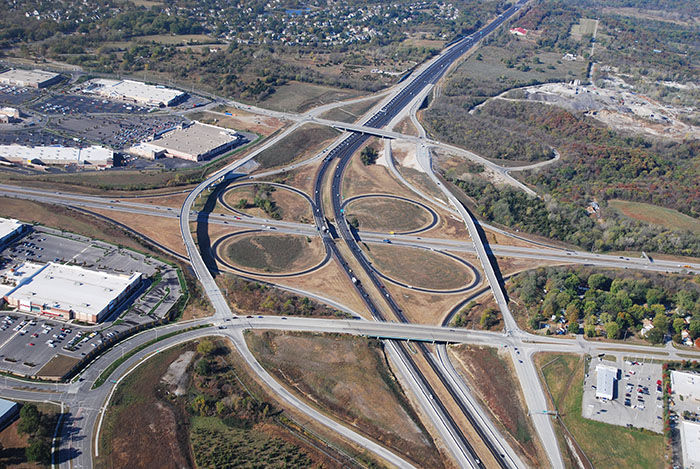
We’ve worked with the Missouri Department of Transportation (MoDOT) on everything from major interchanges to small highway projects. At the heart of each effort is a focus on safety. In celebration of our long-term relationship, we asked Linda Rottinghaus, PE, Principal and Jacob Wilson, PE, Highway Team Lead, to share their insights on our history together.
How did you start working with MoDOT?
Linda: Affinis engineers have been partnering with MoDOT since at least 1994, when I came on board. At the time, they were designing four-lanes on 291 Highway between 210 and 24 Highways. In fact, this project was one of the reasons I was hired. I had previously worked for MoDOT and built strong relationships in my career.
How would you describe your partnership?
Jacob: The team at MoDOT is incredibly easy to work with. They approach projects with a certain flexibility and give us the latitude to add practical elements to their plans. They are very receptive to new ideas and are willing to collaborate with us to include or change things if it will create a better, more cost-effective outcome.
How has your relationship changed over the years?
Linda: When we first began working together, MoDOT was focused on new expansion projects. At the time, we were designing four-lane expressways for them, like the MO-291 Highway. But, that has changed over the years. Now, their efforts are put towards taking care of their existing system.
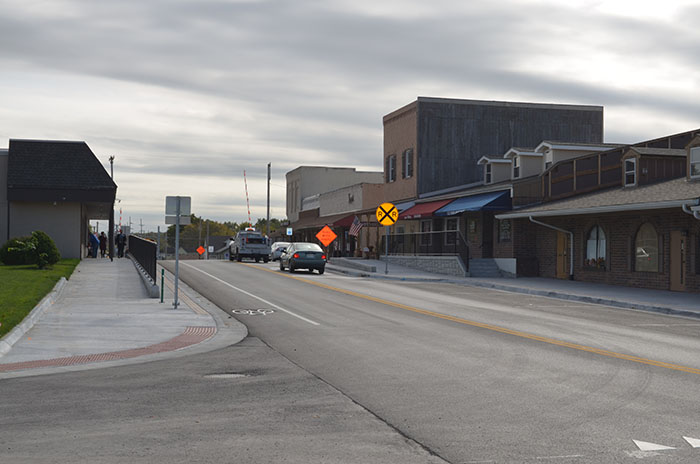
Jacob: Our work with MoDOT has also evolved to meet changing standards. From 2008 to 2010, there was a shift at the federal level to bring existing pedestrian facilities up to ADA standards. That push created design work that is still being completed. The result is an increase in better sidewalks and curb ramps along MoDOT routes.
Why do you think they’ve continued to work with Affinis?
Jacob: Over the course of our relationship, we’ve come to know their standards, team members, and processes. This builds trust. This deep understanding helps our team continually deliver optimal solutions for each project.
Linda: On our Northwest District ADA project, the MoDOT Resident Engineer was complimentary of our plans when it went out to construction. They noted the level of detail and information we were able to provide.
How has this long-term relationship benefited MoDOT?
Jacob: There is a consistency they can expect from our team when it comes to the quality of our work. Over the years, we’ve built a rapport, and they support us in developing innovative solutions. One great example of this is our work on the I-29 and Route HH interchange in Platte City. For this project, we looked at seven alternatives to improve the safety, efficiency, and capacity. Most of those included the relocation of the southbound exit ramp, which was the original approach. However, we came up with the idea to place a roundabout at Vine Street instead of moving the exit ramp. This solved the safety issue, allowed for proper changes in the future due to future development, and saved MoDOT money.
How has this relationship impacted your work with municipal clients?
Jacob: When our municipal clients are leveraging federal funds for improvements along MoDOT routes, we know what MoDOT will tend to allow or not allow. As we prepare designs and talk through strategies, we can guide the process so that we’re moving efficiently instead of wasting time on solutions that won’t meet MoDOT’s standards or preferences.
What have been the keys to your success?
Linda: It all starts with a strong relationship. Because we’ve worked together for more than 25 years, we know MoDOT’s people, processes, and standards. This has allowed our team to continually deliver a high-quality service that anticipates their needs.
Jacob: This in-depth understanding has also given our team the space and freedom to create innovative designs. Together, we’re improving safety on our roadways, using smart, budget-friendly strategies.